Blog
Boston, USA
RTO

In the corporate real estate sector, sustainability and occupant well-being are increasingly critical priorities. Certifications such as Leadership in Energy and Environmental Design (LEED), BCA Green Mark, and WELL provide frameworks to achieve these goals, each with distinct focuses and applications. To kick off, here is a summary that explores their origins, criteria, and impact on corporate real estate, highlighting their role in driving sustainable and healthy building practices. After that, in collaboration with the KaiCari Impact Group, we’ll explore how the simple act of bringing urban farming into corporate real estate can provide an efficient and cost effective way to help achieve these certifications.
LEED Certification
LEED, developed by the U.S. Green Building Council (USGBC) in 1993, is the world’s most widely recognized green building rating system, applied in over 186 countries with more than 195,000 certified buildings as of 2024. LEED provides a comprehensive framework for designing, constructing, and operating sustainable buildings, emphasizing energy efficiency, water conservation, waste reduction, and indoor environmental quality. It is applicable to various project types, including commercial offices, data centers, and retail spaces, making it highly relevant for corporate real estate.
LEED certification is awarded at four levels—Certified (40–49 points), Silver (50–59 points), Gold (60–79 points), and Platinum (80+ points)—based on a 100-point scale, plus 10 bonus points for regional priorities or innovation. Projects earn points across categories like sustainable sites, energy efficiency, materials selection, and indoor environmental quality. For corporate real estate, LEED’s Building Design and Construction (BD+C) and Operations and Maintenance (O+M) rating systems are particularly relevant. BD+C supports new constructions and major renovations, while O+M focuses on optimizing existing buildings’ performance.
In corporate settings, LEED certification enhances property value, reduces operating costs, and aligns with Environmental, Social, and Governance (ESG) goals. For example, a 2021 USGBC report noted that LEED-certified office properties attract higher leasing rates and perform well for investors focused on ESG objectives.
BCA Green Mark Certification
Launched in 2005 by Singapore’s Building and Construction Authority (BCA), the BCA Green Mark is a green building rating system tailored to Singapore’s tropical climate and urban context, though it has influenced sustainable practices in countries like Malaysia and China. It evaluates buildings based on energy efficiency, water efficiency, environmental protection, indoor environmental quality, and other green innovations. Certification levels include Certified, Gold, GoldPLUS, and Platinum, determined by a points-based system.
Green Mark’s focus on energy efficiency is particularly impactful. Retrofitted buildings meeting Super Low Energy (SLE) standards are 63% more energy-efficient, with new SLE buildings achieving investment payback in as little as 4.5 years. The certification process involves submitting applications, pre-assessment audits, and documentary reviews, with higher ratings like GoldPLUS and Platinum requiring panel assessments. For corporate real estate professionals, Green Mark enhances property marketability and supports Singapore’s net-zero emissions goal by 2050, though its regional specificity limits global applicability compared to LEED.
WELL Certification
The WELL Building Standard, introduced by the International WELL Building Institute (IWBI), focuses exclusively on human health and well-being, addressing air, water, nourishment, light, fitness, comfort, and mind. Unlike LEED and Green Mark, which prioritize environmental sustainability, WELL targets occupant health, making it a complementary certification for corporate real estate aiming to enhance workplace productivity and employee satisfaction.
WELL certification is structured around ten concepts, setting performance-based requirements to create healthier indoor environments. In corporate offices, WELL-certified spaces improve air quality, optimize lighting, and promote mental well-being, which can reduce absenteeism and boost morale. WELL’s niche focus on health can make it less comprehensive for environmental sustainability, so it is sometimes integrated with a LEED certification for a more holistic approach. The certification process involves expert guidance to meet WELL’s rigorous standards.
Applications and Impact in Corporate Real Estate
In corporate real estate, these certifications drive competitive advantages. LEED enhances global marketability, reduces utility costs (20–30% energy savings), and aligns with investor ESG priorities. Green Mark is critical in Singapore, boosting occupancy rates and supporting national sustainability goals, with tangible financial returns through energy savings. WELL prioritizes employee health, fostering productive workplaces, which is increasingly vital as companies compete for talent.
Challenges include certification costs, complexity, and regional applicability. LEED’s global reach contrasts with Green Mark’s Singapore-centric focus, while WELL’s health emphasis requires integration with broader sustainability frameworks. Corporate real estate professionals must align certifications with project goals, local regulations, and market demands. Together, LEED, Green Mark, and WELL transform corporate real estate by promoting sustainability, health, and economic benefits. As global and regional sustainability targets tighten, these certifications will remain pivotal in shaping high-performing, occupant-centric buildings.
How can Indoor Urban Farming help?
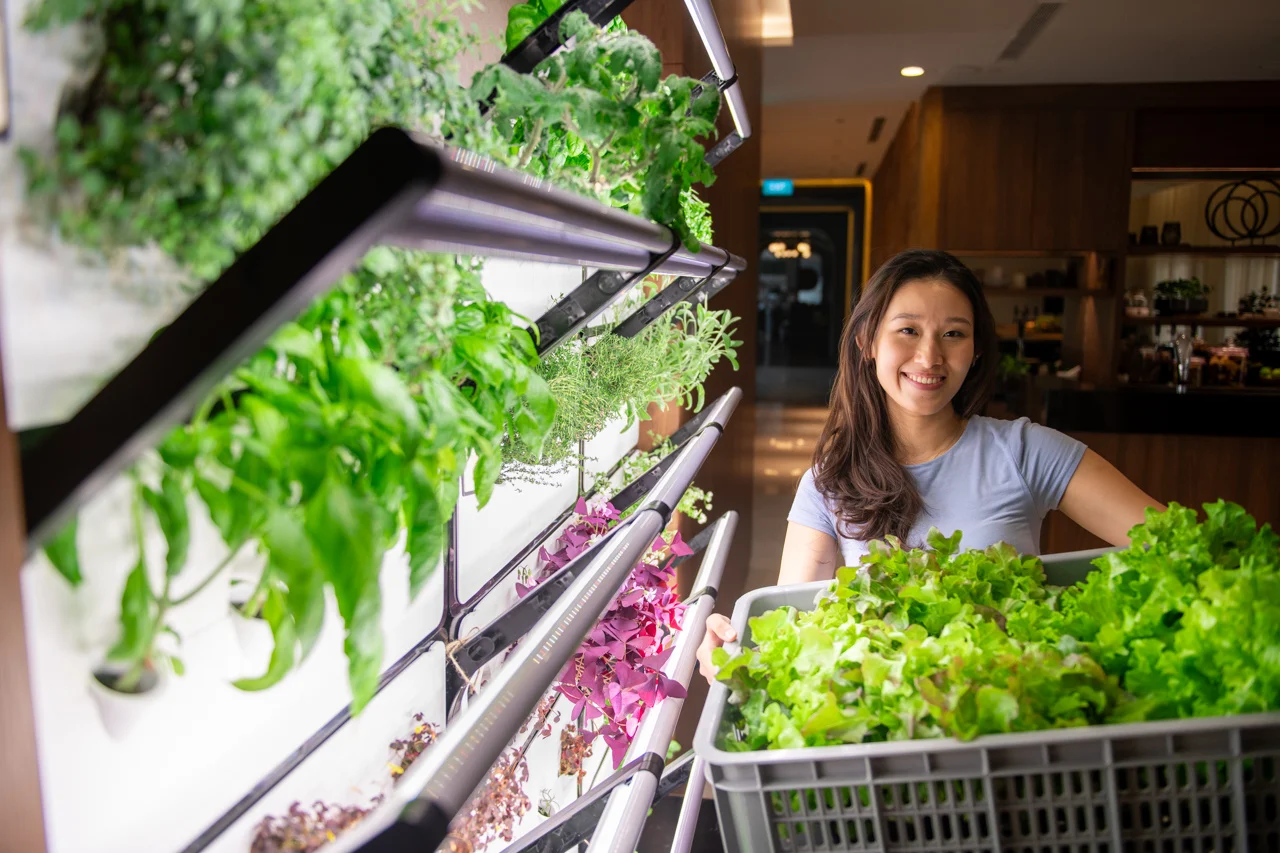
So as it turn’s out, Grobrix edible green walls are a powerhouse for racking up points for these certifications, whilst at the same time turning corporate spaces into sustainable, feel-good hubs. Here’s how it’s done!
For WELL v2, indoor farming like Grobrix’s urban farms hits multiple concepts. In Nourishment, on-site greens ensure daily access to fresh produce, meeting pre-conditions and earning points for nutrition education via harvest workshops and healthy food promotion through signage. Food Production credits come from edible gardens yielding kilos of greens weekly, while Local Food Environment is satisfied by produce grown right in the office. In Mind, green walls act as natural elements for mental respite, supporting pre-conditions and restorative spaces. Movement gets a boost from active harvest sessions, encouraging staff to ditch desks. A Grobrix vertical farm can unlock up to 20% of WELL Gold points, fostering wellness with every leaf. Here is that broken down in more detail.
t
t
t
t
t
The End Product
At the end of the day, urban farming enhances the quality and diversity of food available to urban consumers. Produce grown closer to where it is consumed is harvested at peak ripeness, ensuring superior flavour and nutrition compared to supermarket options, which are often picked early for transport. The farm-to-table model minimises harvest-to-consumption time, preserving nutrients and taste, and delivering fresher, tastier, and more nutritious food that improves diets and health.
Beyond quality, urban farming promotes crop diversity. Traditional agriculture prioritises monoculture for efficiency and transport durability, limiting crop variety. In contrast, urban farms cultivate diverse fruits, vegetables, and herbs, including heirloom and exotic varieties tailored to local preferences. This diversity enriches culinary experiences and encourages balanced, nutritious diets, enhancing food security. Localised food systems allow urban communities to enjoy fresh, locally adapted produce that reflects their cultural and dietary needs.
The aesthetic appeal of urban farming also enhances urban spaces. Edible gardens add vibrant greenery to offices, schools, and public areas, creating inviting environments that inspire healthy eating and environmental awareness. This integration of functionality and beauty makes urban farming an attractive addition to modern cities, promoting health and well-being.

Supporting the Social Fabric of Communities
Grobrix’s indoor farming solutions aim to reconnect urban communities to the source of their food through their vertical gardens, which enable communities to grow fresh produce, promoting social cohesion and a sense of belonging. Education is a cornerstone of urban farming’s social impact, and Grobrix enhances this through its mission to empower communities. As Mathew explains, “At Grobrix, we believe urban farming should be enjoyed by all as a lifestyle endeavour to nourish the body, the mind and the soul.” Their farm-to-table workshops teach healthy eating and cultivation skills, equipping individuals to grow their own food. Mathew emphasises, “Our mission is to encourage, enthuse, empower and educate urban communities to grow some of their own food and live more sustainable, self-sufficient, happier and healthier lives.”
Urban farming also supports mental health. Tending to vertical gardens or harvesting produce offers a therapeutic escape from urban life, reducing stress. By integrating urban farming, communities gain opportunities for relaxation and fulfilment. Biophilic design is often incorporated into built environments to enhance well-being. Studies show that biophilic spaces can improve mood and cognitive function, creating a sense of tranquillity.
Addressing Challenges and Future Prospects
Urban farming faces challenges, including limited space in densely populated cities, where suitable land is scarce and expensive. Regulatory hurdles, such as zoning laws and permits, can complicate access to cultivation sites. Additionally, techniques like hydroponics and vertical farming require specialized knowledge, which may not be readily available to all aspiring urban farmers. These barriers can limit urban farming’s adoption.
To overcome these, public and private investment is essential. Funding for research can drive innovations in indoor farming technologies, making them more accessible and cost-effective. Training programs can equip urban farmers with expertise, while supportive policies can streamline regulations and encourage urban farming. These efforts create enabling environments for growth and resilience.
The future of urban farming is promising, driven by demand for local food systems. Innovations like vertical farming and smart agriculture will enhance efficiency, enabling urban farms to produce more with fewer resources. Singapore’s 30 by 30 initiative , aiming to produce 30% of nutritional needs locally by 2030, underscores urban farming’s role in food security. Consumer demand for local, organic, and farm-to-table produce further drives interest in urban farms as alternatives to imported goods
To Conclude
Urban farming transforms food production, delivering environmental, social, and health benefits. By reducing food miles, minimizing waste, and providing fresher, more diverse farm-to-table produce, it enhances diets and well-being. Edible gardens strengthen communities, promote education, and support mental health, creating vibrant urban ecosystems. While challenges like space, regulations, and skills persist, investment and innovation can overcome them. Urban farming is poised to shape a resilient future for cities worldwide.


Explore more Grobrix →

Discover the benefits of our famous workplace workshops

Find out more about our patented design and service
Find out more about Grobrix team and mission
Growing Together
Since 2019
Copyright © 2026 GROBRIX. All Rights Reserved.